Artificial intelligence is no longer limited to automation or chatbots. Today, businesses use AI to improve creativity, decision-making, employee productivity, and workplace efficiency in ways that were almost impossible a few years ago.
When I first explored how companies use AI in the workplace, I assumed it was mostly about saving time through automation. But after researching real-world applications and testing several AI-powered tools myself, I realized that the benefits go far beyond repetitive task management.
From helping teams generate creative ideas faster to improving employee well-being and making data-driven business decisions, artificial intelligence is transforming modern workplaces across almost every industry.
In this guide, I’ll explain the most surprising benefits of artificial intelligence in the workplace, along with practical examples, business use cases, challenges, and AI tools that companies use daily.
Benefit 1: AI Improves Creativity and Innovation
One of the biggest misconceptions about artificial intelligence is that it reduces human creativity. In reality, I’ve found that AI often acts as a creative assistant rather than a replacement.
Today, businesses use AI-powered tools to brainstorm ideas, generate content, improve designs, and speed up creative workflows.
For example, marketing teams use AI to:
- Generate blog outlines
- Create ad copy
- Suggest social media captions
- Improve email campaigns
- Design presentations and graphics
Instead of replacing creative professionals, AI helps them save time on repetitive work so they can focus on strategy and innovation.
Real-World Example of AI in Creativity
Many businesses now use AI-powered design and writing tools to speed up content creation. Graphic designers use AI to generate layouts and visual concepts, while writers use AI tools for brainstorming and editing assistance.
Even musicians and filmmakers are experimenting with AI-generated music, scripts, and storytelling concepts to explore new creative possibilities.
How AI Helps Creative Teams?
Here are some practical ways AI supports workplace creativity:
- Content Generation –AI tools can generate marketing content, reports, product descriptions, and blog drafts in minutes.
- Design Assistance – AI-powered design platforms suggest layouts, color combinations, and visual improvements automatically.
- Personalized Marketing – Businesses use AI to analyze customer behavior and create personalized campaigns that improve engagement.
- Presentation Creation – AI presentation tools now help professionals create presentations much faster than traditional manual design methods.
One AI tool I personally find useful is the MagicSlides AI Presentations Tool. It helps convert topics, documents, PDFs, URLs, and YouTube videos into professional presentations automatically. Instead of spending hours creating slides manually, I can generate a structured presentation in minutes.
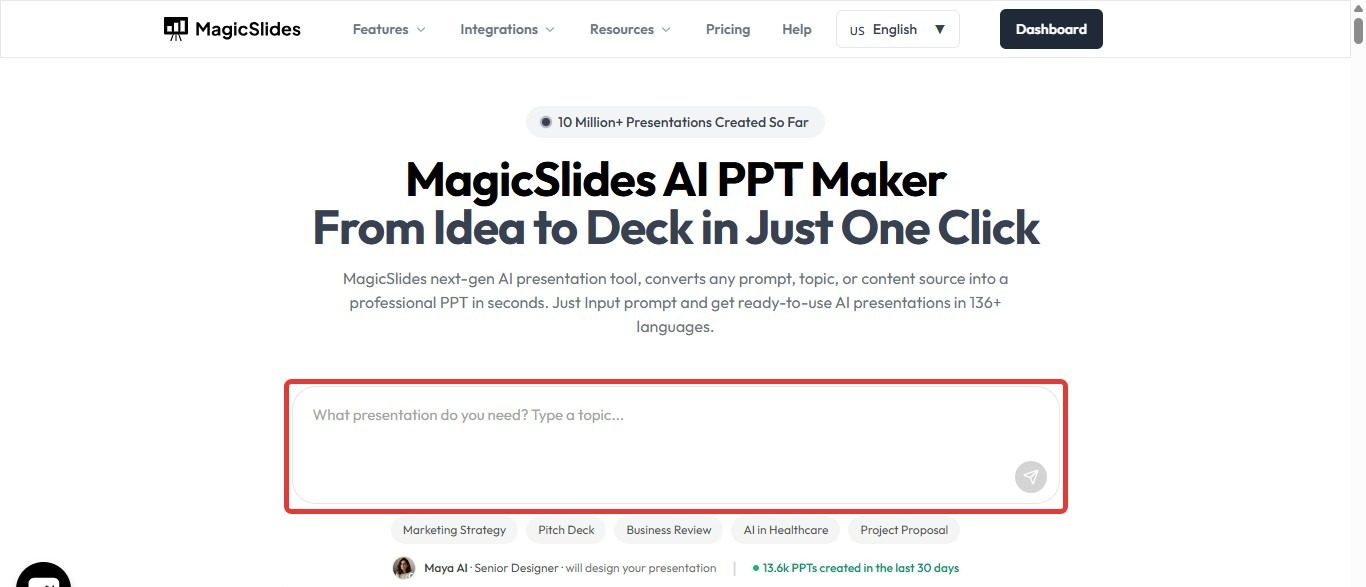
This is especially useful for:
- workplace reports
- business pitches
- training presentations
- educational sessions
- marketing presentations
For professionals who regularly create presentations, AI-powered tools like MagicSlides AI can significantly improve productivity while maintaining presentation quality.
Benefit 2: AI Improves Decision-Making
Another major benefit of artificial intelligence in the workplace is better decision-making.
Businesses today generate huge amounts of data daily. Without AI, analyzing this information manually becomes difficult and time-consuming.
AI systems can process large datasets quickly and identify trends, risks, and opportunities much faster than traditional analysis methods.
I’ve noticed that companies increasingly rely on AI for:
- sales forecasting
- inventory management
- customer insights
- financial planning
- hiring decisions
- operational optimization
Real-World Applications of AI Decision-Making
- Supply Chain Optimization – Logistics companies use AI to optimize transportation routes, reduce fuel costs, and improve delivery efficiency.
- Recruitment and Hiring – HR teams use AI-powered software to screen resumes, shortlist candidates, and analyze hiring patterns.
- Financial Analysis – Financial institutions use AI to detect fraud, analyze investment trends, and improve risk management.
- Healthcare Diagnostics – Doctors and healthcare providers use AI systems to assist in analyzing medical data and identifying potential health conditions faster.
AI and Big Data
AI becomes even more powerful when combined with big data analytics.
Businesses can analyze customer behavior, operational trends, and purchasing patterns in real time to make smarter decisions faster.
For example:
- eCommerce companies use AI to recommend products
- streaming platforms personalize content suggestions
- retailers forecast inventory demand
- customer support teams analyze user behavior
This level of data analysis helps businesses improve efficiency while delivering better customer experiences.
Industries Using AI the Most
Artificial intelligence is transforming multiple industries worldwide. Some sectors are adopting AI faster because of the operational and financial advantages it offers.
- Healthcare – Healthcare providers use AI for medical imaging analysis, patient monitoring, and faster diagnosis support.
- Finance – Banks use AI for fraud detection, customer support automation, and risk analysis.
- Marketing – Marketing teams rely on AI for SEO, content creation, personalization, and campaign optimization.
- Human Resources – HR departments use AI for resume screening, employee engagement analysis, and onboarding automation.
- Logistics and Supply Chain – AI improves route planning, warehouse management, and inventory forecasting.
- Education – Educational institutions use AI tools for personalized learning experiences and automated administrative support.
Benefit 3: AI Supports Employee Well-Being
One of the most overlooked benefits of artificial intelligence in the workplace is employee well-being.
As workplace burnout and stress continue to increase, businesses are now using AI-powered tools to improve employee experiences and create healthier work environments.
I’ve noticed that many companies use AI to:
- Reduce repetitive workloads
- improve work-life balance
- automate stressful manual tasks
- support employee mental health
- optimize schedules and productivity
Ways AI Improves Workplace Well-Being
- Mental Health Support – AI-powered chatbots and wellness platforms provide emotional support resources and mental health guidance.
- Time Management – AI productivity tools help employees prioritize tasks and reduce workload stress.
- Smart Workplace Environments – Some organizations use AI systems to optimize lighting, temperature, and workspace conditions for comfort and productivity.
- Employee Feedback Systems – AI tools analyze employee feedback and workplace satisfaction trends to identify improvement areas.
When repetitive tasks are automated, employees can focus more on meaningful work, collaboration, and problem-solving.
Popular AI Tools Used in Modern Workplaces
Businesses now use AI-powered tools daily to improve productivity and streamline workflows.
ChatGPT
Used for writing, brainstorming, research, coding assistance, and customer support.
Microsoft Copilot
Helps automate workflows across Microsoft Office applications.
Grammarly
Improves grammar, clarity, and professional communication.
Notion AI
Assists with note-taking, summaries, and project management.
Canva AI
Helps users create visual content quickly using AI-powered design features.
MagicSlides AI
MagicSlides AI helps professionals generate presentations automatically from topics, PDFs, URLs, YouTube videos, and documents.
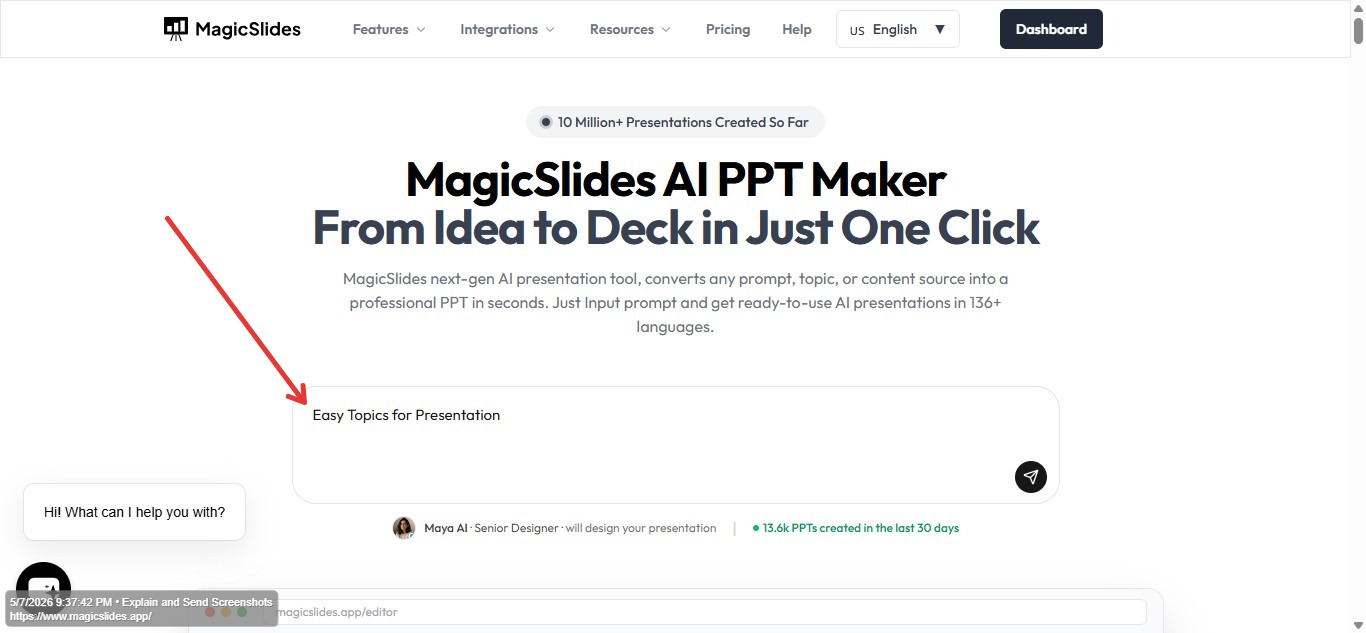
I find it especially useful when creating:
- business reports
- training decks
- educational presentations
- pitch decks
- meeting presentations
Instead of spending hours formatting slides manually, AI presentation tools can generate structured presentations in minutes.
Challenges of AI Adoption in the Workplace
Although AI offers many advantages, businesses also face several challenges during implementation.
Data Privacy Concerns
AI systems require large amounts of data, which raises concerns about privacy and security.
Employee Resistance
Some employees worry about job displacement or struggle to adapt to AI-powered workflows.
Algorithm Bias
AI systems can produce biased results if they are trained on inaccurate or unbalanced data.
High Initial Costs
Implementing AI solutions often requires investment in software, infrastructure, and employee training.
Overdependence on Technology
Relying too heavily on AI may reduce human judgment and creativity in some situations.
Businesses should focus on ethical AI usage, employee training, and transparency to overcome these challenges successfully.
Pros of AI in the Workplace
- Improves productivity and efficiency
- Reduces repetitive manual work
- Supports faster decision-making
- Enhances customer experiences
- Helps businesses analyze large datasets
- Improves workplace automation
- Assists with creativity and innovation
- Supports remote and hybrid work environments
Cons of AI in the Workplace
- Potential job displacement
- Privacy and data security concerns
- Bias in AI-generated decisions
- High setup and maintenance costs
- Dependence on technology
- Learning curve for employees
Future of Artificial Intelligence in the Workplace
Artificial intelligence is expected to become even more integrated into daily workplace operations in the coming years.
Businesses are already investing in:
- AI-powered assistants
- workflow automation
- predictive analytics
- personalized employee experiences
- smart collaboration systems
However, I believe the future workplace will not replace humans entirely. Instead, AI will continue acting as a collaborative tool that enhances human productivity, creativity, and decision-making.
Companies that strategically adopt AI while maintaining human oversight will likely gain the biggest competitive advantage in the future.
Conclusion
Artificial intelligence is transforming workplaces far beyond simple automation. From improving creativity and decision-making to supporting employee well-being and workplace productivity, AI is becoming an essential business tool across industries.
After exploring various AI applications and workplace tools, I’ve realized that the biggest advantage of AI is not replacing people — it’s helping professionals work smarter and more efficiently.
Businesses that adopt AI responsibly while balancing human creativity and ethical practices will be better prepared for the future of work.
Frequently Asked Questions
Q1. What are the biggest benefits of artificial intelligence in the workplace?
Some of the biggest benefits include improved productivity, faster decision-making, workplace automation, enhanced creativity, and better employee support.
Q2. How does AI improve workplace productivity?
AI automates repetitive tasks, analyzes data quickly, and helps employees focus on strategic and creative work instead of manual processes.
Q3. Can AI replace human workers completely?
No. AI is mainly designed to support and enhance human work rather than fully replace employees in most industries.
Q4. Which industries use AI the most?
Healthcare, finance, marketing, logistics, education, and human resources are among the industries using AI extensively.
Q5. What are the risks of using AI in the workplace?
Potential risks include data privacy concerns, algorithm bias, employee resistance, and overdependence on technology.
Leave a Reply